Bukchon Hanok Village
북촌한옥마을
History · 37 Gyedong-gil, Jongno-gu, Seoul
Nearby stations and stops
- Anguk (Line 3) · straight-line 301m
- Jongno 3(sam)ga (Tapgol Park) (Line 5) · straight-line 817m
- Bus stop 현대사거리 · straight-line 53m
- Bus stop 재동초등학교 · straight-line 102m
Straight-line distance; the actual walk is longer · Data as of 2025-10-31
Source: Korea National Railway urban rail station information · Ministry of Land, Infrastructure and Transport nationwide bus stop locations
- Admission
- Not provided
- Hours
- 10:00-17:00
- * Applies to road along Bukchon-ro 11-gil
- Closed
- Open every day
- N/A (Open all year round)
- Parking
- No parking
- Not available
- Pets
- Not provided
- Accessibility
- Not provided
- Data status
- Source: Korea Tourism Organization TourAPI · Source updated: 2025-06-19 · Collected: Not provided
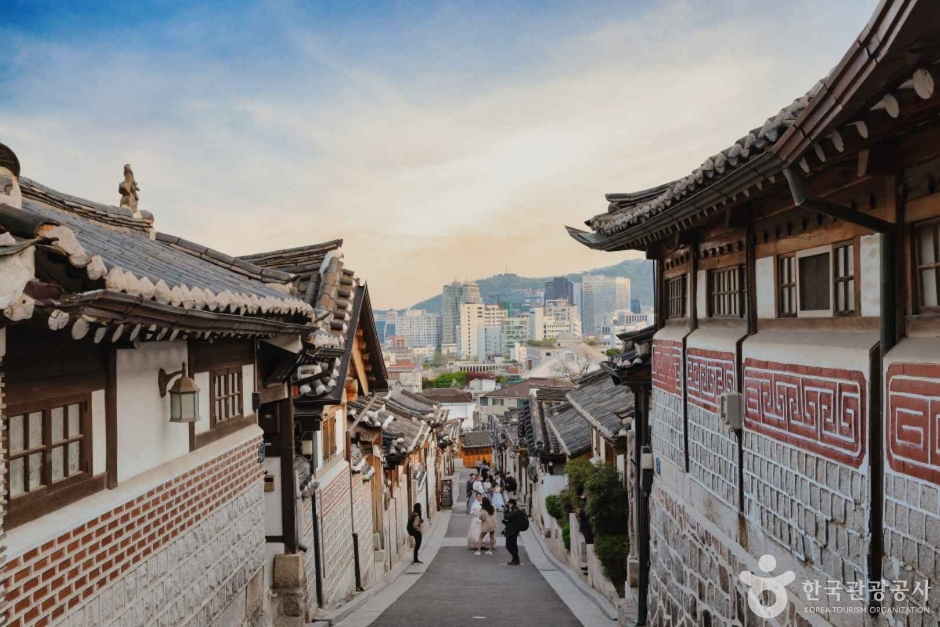
Surrounded by Gyeongbokgung Palace, Changdeokgung Palace and Jongmyo Shrine, Bukchon Hanok Village is home to hundreds of traditional houses, called hanok, that date back to the Joseon dynasty. The name Bukchon, which literally translates to "northern village," came about as the neighborhood lies north of two significant Seoul landmarks, Cheonggyecheon Stream and Jongno. Today, many of these hanoks operate as cultural centers, guesthouses, restaurants and tea houses, providing visitors with an opportunity to experience, learn and immerse themselves in traditional Korean culture. As Bukchon Hanok Village is an actual neighborhood with people's homes, visitors are advised to be respectful at all times while looking around.
In the area
Folk Villages 2 of 71 attractions in Jongno-gu
Similar places nearby
Similar places in other regions
- Jeonju Hanok Village [Slow City] · Jeonbuk-do
- Gyeongju Gyochon Traditional Village · Gyeongsangbuk-do
- Gyeongju Yangdong Village [UNESCO World Heritage] · Gyeongsangbuk-do
- Andong Gunja Village (Ocheon Historic Site) (안동 군자마을(오천유적지)) · Gyeongsangbuk-do
- Songdo Hanok Village · Incheon
Source: Korea Tourism Organization TourAPI