Andong Folk Village
안동민속촌
History · Seonggok-dong, Andong-si, Gyeongsangbuk-do
Nearby stations and stops
- Bus stop 안동시립민속박물관 · straight-line 72m
- Bus stop 엄달골 · straight-line 278m
Straight-line distance; the actual walk is longer · Data as of 2025-10-31
Source: Ministry of Land, Infrastructure and Transport nationwide bus stop locations
- Admission
- Not provided
- Hours
- Open 24 hours
- Closed
- Open every day
- N/A (Open all year round)
- Parking
- Parking available
- Available
- Pets
- Not provided
- Accessibility
- Not provided
- Data status
- Source: Korea Tourism Organization TourAPI · Source updated: 2024-05-30 · Collected: Not provided
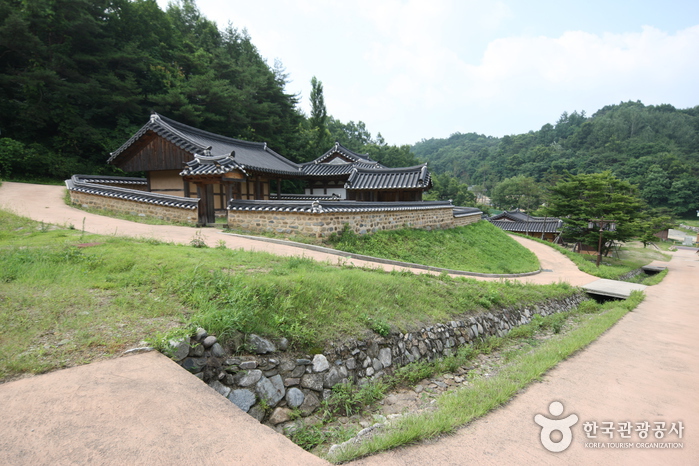
On the other side of the subsidiary dam of Andong Dam, thatched houses can be sparsely seen on a hilltop. The area is practically an outdoor museum, displaying traditional houses that were moved to safety prior to the construction of Andong Dam. Two jangseung (traditional Korean totem poles) are raised at the entrance of the outdoor museum, followed by a monument inscribed with the poem of famous Andong poet and democracy activist, Lee Yuk-sa. On the monument, his most noted work “Gwangya” (Wild Plain) is carved. Nearby attractions include Andong Museum, Lee Yuk-sa Monument, a filming site of “Taejo Wang Geon (2000)," and Andongho Lake.
In the area
Folk Villages 5 of 24 attractions in Andong-si
Similar places nearby
- Andong Gunja Village (Ocheon Historic Site) (안동 군자마을(오천유적지)) · 10.9km
- Yekki Village · 14.0km
- Jirye Arts Village · 18.2km
- Andong Hahoe Village [UNESCO World Heritage] · 21.5km
Similar places in other regions
- Munui Cultural Properties Site · Chungcheongbuk-do
- Choi Champandaek (House of Choi Champan) · Gyeongsangnam-do
- The Literary Village of Kim You Jeong · Gangwon-do
- Nonsan Myeongjae House · Chungcheongnam-do
- Dasan Heritage Site (Namyangju) (다산유적지 (남양주)) · Gyeonggi-do
Source: Korea Tourism Organization TourAPI