Bongwonsa Temple
봉원사
History · 120, Bongwonsa-gil, Seodaemun-gu, Seoul
Nearby stations and stops
- Dongnimmun (Line 3) · straight-line 990m
- Muakjae (Line 3) · straight-line 1.2km
- Bus stop 봉원사 · straight-line 266m
- Bus stop 봉원사길 · straight-line 429m
Straight-line distance; the actual walk is longer · Data as of 2025-10-31
Source: Korea National Railway urban rail station information · Ministry of Land, Infrastructure and Transport nationwide bus stop locations
- Admission
- Not provided
- Hours
- Not provided
- Closed
- Not provided
- Parking
- Parking available
- Available
- Pets
- Not provided
- Accessibility
- Not provided
- Data status
- Source: Korea Tourism Organization TourAPI · Source updated: 2023-03-13 · Collected: Not provided
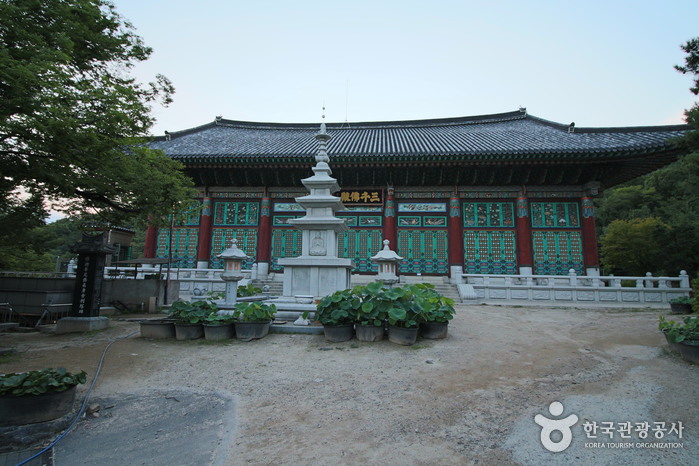
Located on the outskirts of Ansan Mountain in Bongwon-dong, Seodaemun-gu, Seoul, Bongwonsa Temple, as the center of Korean Buddhism Taego, is a thousand-year-old temple with a long history and tradition. In 889 (3rd year of Shilla Queen Jinseong’s reign), Monk Doseon founded it at the ground of Yeonhui Palace (now Yonsei Univ.) and named it Banyasa temple. It was destroyed during the Imjin War in 1592, and later in 1748 (the 24th year of Joseon King Yeongjo’s reign), it was rebuilt and renamed “Bongwonsa” by two Buddhist monks, Chanjeup and Jeungam. “Yeongsanjae,” one of the Buddhist rituals and also a National Intangible Cultural Property, takes place at Bongwonsa on June 6 every year wishing for world peace and the reunification of North and South Korea. It was designated as one of the Intangible Cultural Heritage of Humanity by UNESCO in 2009. During Yeongsanjae, visitors can enjoy the Buddhist arts such as Beompae (Buddhist temple music for rituals) and dancing. Also, during summertime, Seoul Lotus Flower Culture Festival takes place, where visitors can enjoy the beautiful lotus flowers which are a symbol of Buddhism.
In the area
Buddhism 1 of 10 attractions in Seodaemun-gu
Similar places in other regions
- Daeheungsa Temple [UNESCO World Heritage] · Jeonnam-Gwangju Special Metropolitan City
- Boeun Beopjusa Temple [UNESCO World Heritage] · Chungcheongbuk-do
- Yeongwol Beopheungsa Temple (법흥사(영월)) · Gangwon-do
- Yeongcheon Eunhaesa Temple (은해사 (영천)) · Gyeongsangbuk-do
- Paju Bogwangsa Temple (보광사(파주)) · Gyeonggi-do
Source: Korea Tourism Organization TourAPI