Historical Site of Wangin
왕인박사 유적지
History · 440 Wangin-ro, Yeongam-gun, Jeonnam-Gwangju Special Metropolitan City
Nearby stations and stops
- Bus stop 왕인박사유적지 · straight-line 369m
Straight-line distance; the actual walk is longer · Data as of 2025-10-31
Source: Ministry of Land, Infrastructure and Transport nationwide bus stop locations
- Admission
- Not provided
- Hours
- Summer 09:00-18:00 / Winter 09:00-17:00
- Closed
- Not provided
- Parking
- Parking available
- Available (150 parking spaces)
- Pets
- Not provided
- Accessibility
- Not provided
- Data status
- Source: Korea Tourism Organization TourAPI · Source updated: 2026-06-30 · Collected: Not provided
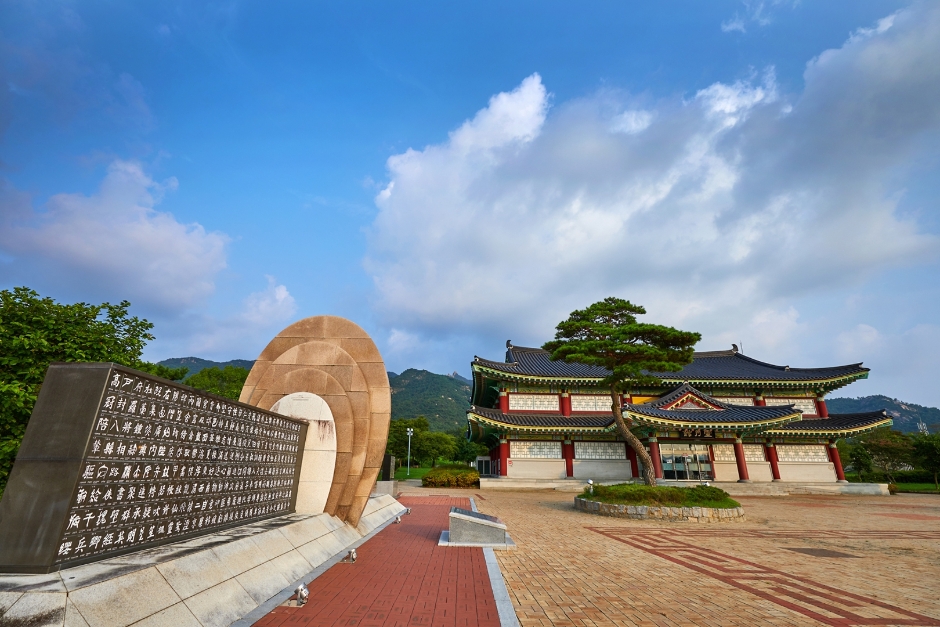
The hometown of Wangin Baksa (Wangin the Great Scholar) is located at the foot of Munpilbong Peak to the east of Gurim Village. Due to Wangin’s importance and contributions to Korean history, this historical attraction is preserved and maintained in honor of his memory and achievements. Seonggidong is the official birthplace of Wangin (marked by the Yuheobi memorial monument) and is also home to Seongcheon, the well Wangin is believed to have drunk from. Halfway up Wolchulsan Mountain are Chaekgul, Munsanjae and Yangsajae where Wangin is said to have studied as well as nurtured local pupils. To commemorate the significance of these areas, a memorial is held every March at Munsanjae and Yansanjae. In front of Chaekgul is a statue of Wangin which is said to symbolize his benevolent character. Just west of Seonggidong is Doljeonggogae, a hill from which it is believed Wangin made a sorrowful look back at his countrymen before leaving for Japan. Wangin departed for Japan from Sangdaepo, which at the time was an international trading port. The renowned Baekje scholar was beginning his journey at the request of Japanese Emperor Eungshin. He took with him ten books on the Analects of Confucius and a book of Cheonjamun, a text of one thousand Chinese characters. Over time, he earned the trust of the emperor and became instructor to the crown prince. Wangin is well-known for his part in the development of Japanese culture and his name appears often in Japanese history. Wangin educated beyond textbooks and made great contributions to the development of arts, crafts and music and is revered as the originator of Japan’s Asuka culture. This historic site was originally reconstructed from 1985 to 1987 and is continually receiving improvements to improve accessibility for visitors.
In the area
Other Historic Sites 1 of 6 attractions in Yeongam-gun
Similar places in other regions
- Bonghwa Cheongnyangsa Temple (청량사(봉화)) · Gyeongsangbuk-do
- Wansan Park · Jeonbuk-do
- Gyeongju-si Special Tourist Zone · Gyeongsangbuk-do
- Cheongnyangsan Provincial Park · Gyeongsangbuk-do
- Gwanaksan Mountain · Seoul
Source: Korea Tourism Organization TourAPI