Gwanghalluwon Garden
광한루원
History · 1447 Yocheon-ro, Namwon-si, Jeonbuk-do
Nearby stations and stops
- Bus stop 남원초교앞 · straight-line 269m
- Bus stop 추어삼거리 · straight-line 295m
Straight-line distance; the actual walk is longer · Data as of 2025-10-31
Source: Ministry of Land, Infrastructure and Transport nationwide bus stop locations
- Admission
- Not provided
- Hours
- April-October 08:00-21:00 November-March 08:00-20:00 * Free admission after 18:00
- Closed
- Open every day
- N/A (Open all year round)
- Parking
- Parking available
- Available (Small vehicles: 213 spaces / Large vehicles: 66 spaces)
- Pets
- Not provided
- Accessibility
- Not provided
- Data status
- Source: Korea Tourism Organization TourAPI · Source updated: 2026-05-20 · Collected: Not provided
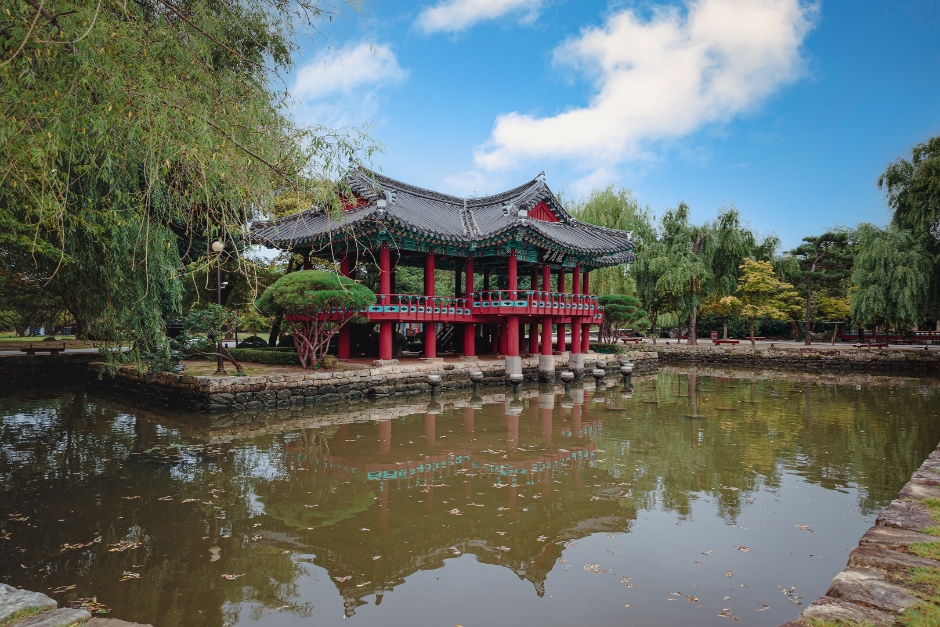
Originally known as Gwangtongnu, Gwanghalluwon Garden was built by Hwang Hui Jeongseung in 1419 during the reign of Joseon dynasty’s King Sejong. Because of its outstanding beauty, Governor Jeong In-ji gave the garden the name "Gwanghallu" in 1444, comparing it to a garden from the palace on the moon. It is famous as the location where Lee Mong-ryong and Chunhyang (two lovers from a well-known Korean folk story) first met. In the 1920s Chunhyangsa Temple was established in the neighboring area and a portrait of Chunhyang was hung in a place of honor. The garden is the venue of the Chunhyangjae Festival every spring, celebrating the deep and lasting love of the famous couple. The area around Gwanghalluwon Garden is full of many attractions, including Ojakgyo Bridge, symbolizing the bridge connecting Chilseok and Gyeonwu from the traditional story of Chilseok; and Chunhyang Hall, Wolmae-jip (house of Chunhyang's mother), Wanwoljeong Pavilion, Yeongjugak Pavilion, Samsinsan and many other traditional buildings.
In the area
Other Historic Sites 1 of 5 attractions in Namwon-si
Similar places in other regions
- Myeongokheon Garden · Jeonnam-Gwangju Special Metropolitan City
- Gyeongju Wolseong Palace Site (Banwolseong Fortress) (경주 월성(반월성)) · Gyeongsangbuk-do
- Sigyeongjeong Pavilion · Jeonnam-Gwangju Special Metropolitan City
- Seoul Hyochang Park · Seoul
- Soswaewon Garden · Jeonnam-Gwangju Special Metropolitan City
Source: Korea Tourism Organization TourAPI