Gyeongju Wolseong Palace Site (Banwolseong Fortress) (경주 월성(반월성))
History · Inwang-dong, Gyeongju-si, Gyeongsangbuk-do
Nearby stations and stops
- Bus stop 동궁과월지 · straight-line 179m
- Bus stop 반달마을 · straight-line 237m
Straight-line distance; the actual walk is longer · Data as of 2025-10-31
Source: Ministry of Land, Infrastructure and Transport nationwide bus stop locations
- Admission
- Not provided
- Hours
- Not provided
- Closed
- Open every day
- N/A (Open all year round)
- Parking
- Parking available
- Available (National Gyeongju Museum parking lot)
- Pets
- Not provided
- Accessibility
- Not provided
- Data status
- Source: Korea Tourism Organization TourAPI · Source updated: 2023-01-03 · Collected: Not provided
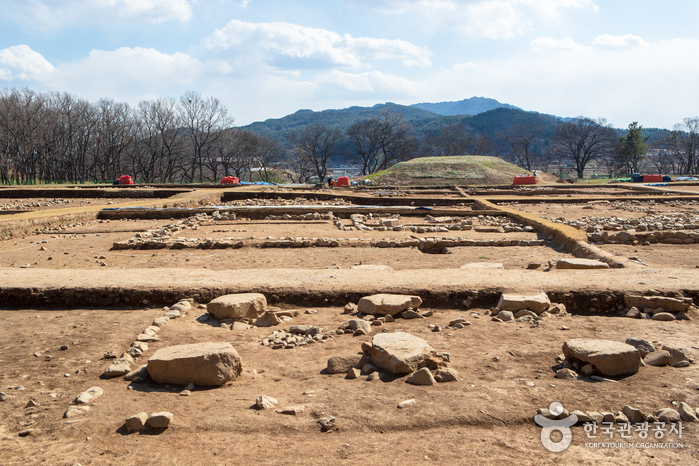
This was the location of the palace-fortress during the Silla dynasty (57 BC ~ AD 935). The fortress takes after its name, which, literally translates to mean a crescent moon shape on top of a hill. The famous history books of Samgukyusa mention that Silla’s 4th King Seoktalhae (AD 57~80) thought this area was an ideal spot for the fortress and bought the land from a nobleman. The 2nd King Namhae (AD 4~24) impressed by Seoktalhae’s actions, took him in as his son-in-law, later, becoming the 4th king. The area was then under Silla’s rule for 900 years, the last king being the 56th, Gyeongsoon (AD 927~935). Although the magnificent grandeur of the palace is now just an empty lot, it has been told that this area was filled with imperial buildings during the Silla dynasty. Currently, the region of Wolseong has a freezer made out of rocks called Seokbinggo, an archery range, a horse-riding field, and a traditional playground, which resembles the grounds of the Joseon Period (the dynasty that ruled the Korean peninsula from 1392-1910).
In the area
Fortress / Fortress Walls 1 of 50 attractions in Gyeongju-si
Similar places in other regions
- Deoksugung Palace · Seoul
- Changdeokgung Palace Complex [UNESCO World Heritage Site] · Seoul
- Gyeongbokgung Palace · Seoul
- Gwanghwamun Gate · Seoul
- Goseokjeong National Tourist Area · Gangwon-do
Source: Korea Tourism Organization TourAPI